

01 — AI Extraction
Pulls and normalizes quote data automatically, cutting manual comparison work.
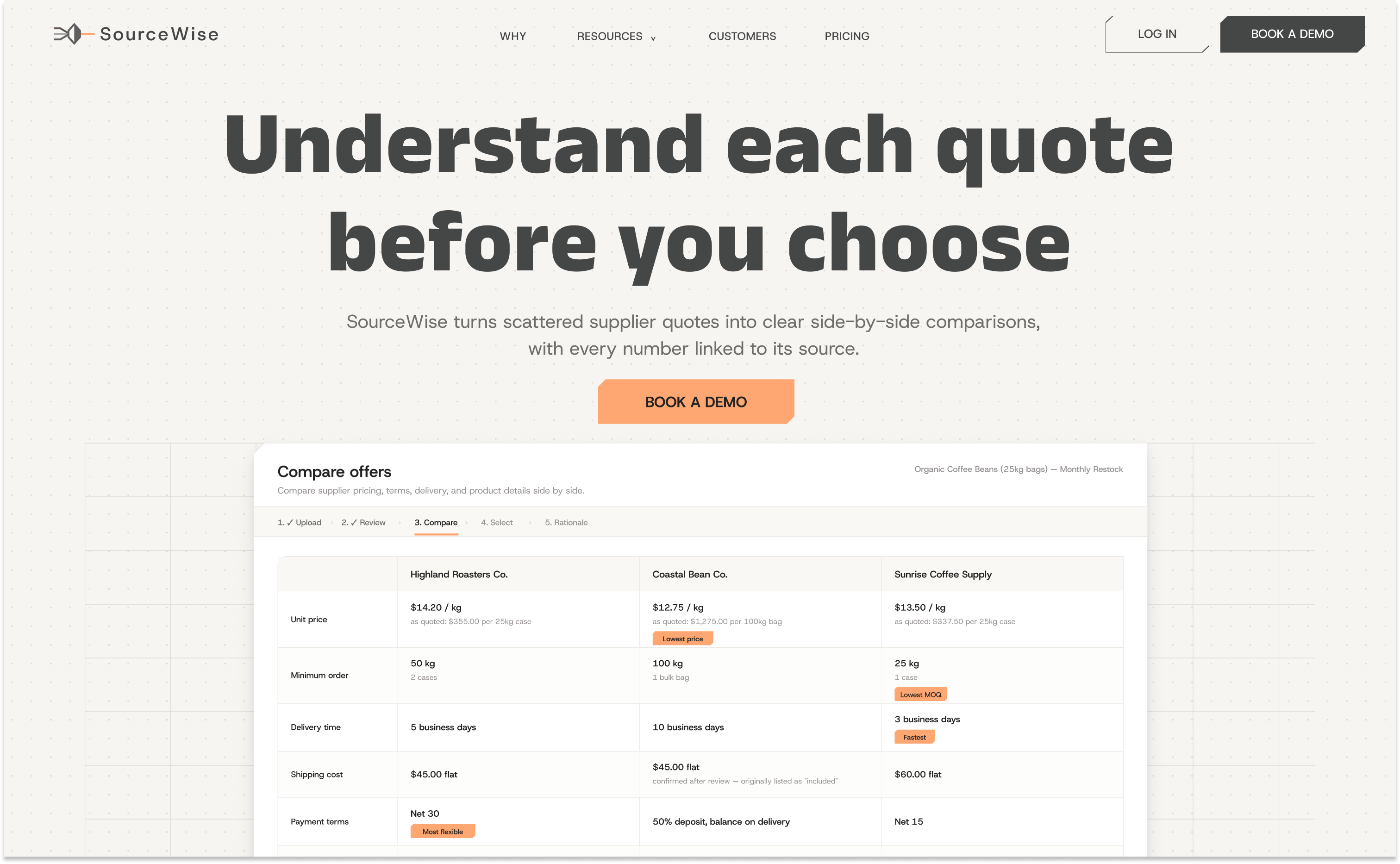
Designed an AI-assisted comparison tool that helps hospitality staff turn scattered supplier quotes into clear, confident decisions.
Hospitality staff who handle purchasing, often without formal procurement training, still compare supplier quotes manually across spreadsheets, PDFs, emails, and even photos of handwritten notes or paper brochures. This makes the process slow, fragmented, and easy to get wrong.
Pulls and normalizes quote data automatically, cutting manual comparison work.
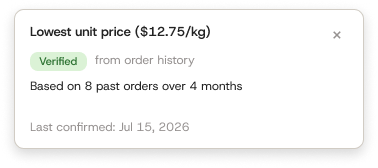
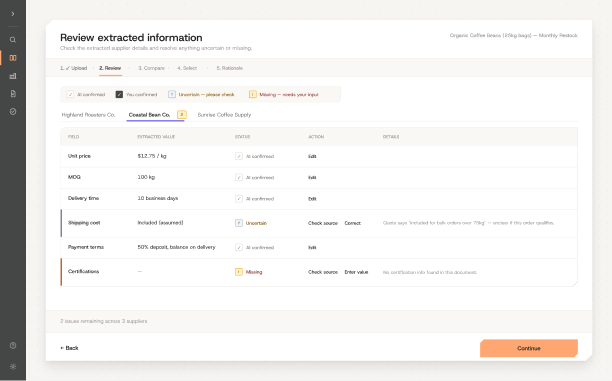
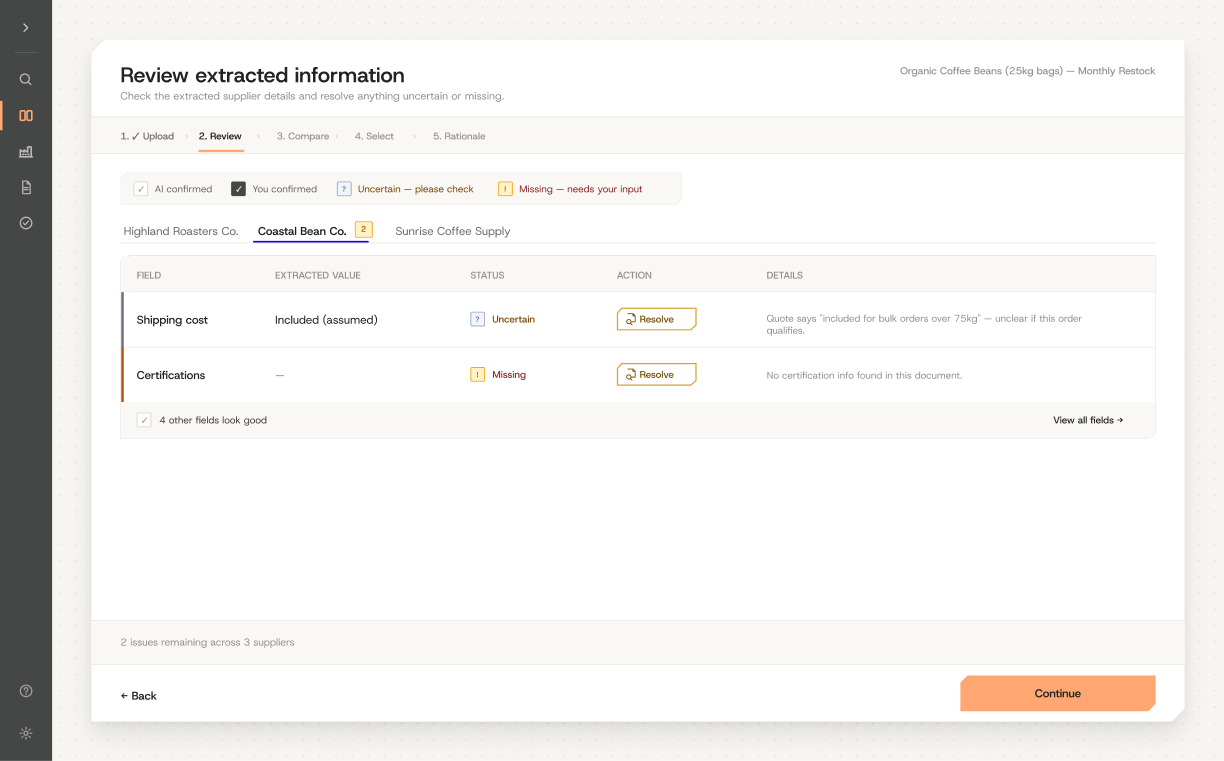
Every value stays linked to its original source: nothing is a black box.
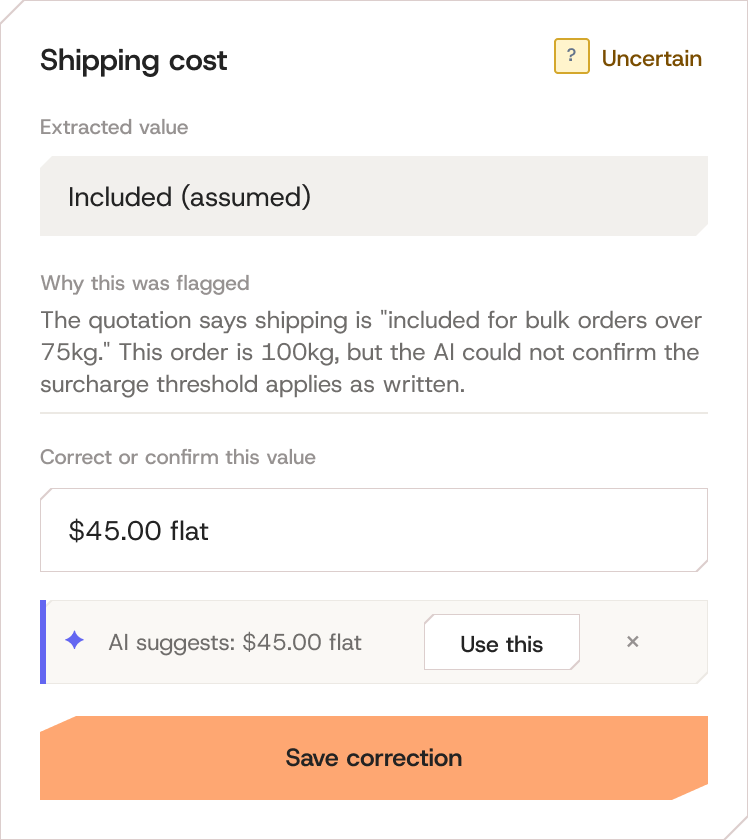
Users can adjust extracted data directly, keeping control over the final decision.
How might we help hospitality staff turn scattered, inconsistent supplier quotes into a confident purchasing decision?
Most tools focus on ongoing ordering and inventory, with supplier comparison as a secondary feature.




A restaurant owner, a kitchen coordinator, and a café/bistro general manager: different roles, different levels of authority, but all responsible for comparing supplier offers.
A WhatsApp text, a PDF, a photo of a handwritten note: I retype it all by hand.
One supplier’s ‘case’ was 12 units, another’s was 24. I almost compared them directly.
A late delivery costs me more than an 8% discount saves.
If it’s wrong and I didn’t catch it, that’s on me, not the AI. So I’m always going to double check the big ones.
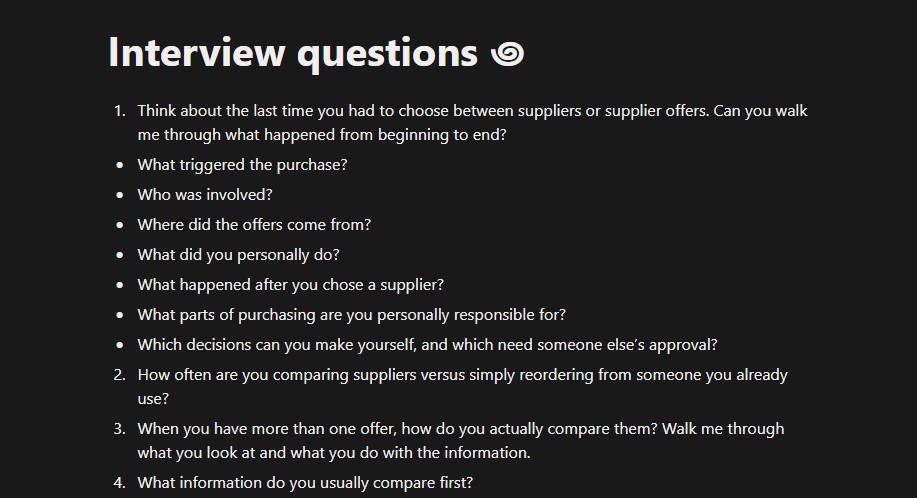
Based on the interview findings, I mapped each pattern to a feature focused on reducing manual work and building trust incrementally.
Structures supplier offers into one comparable format
Converts units and pricing into an apples-to-apples view
Weighs delivery, MOQ, and reliability alongside price
Shows the source behind every number before you trust it
Rather than treating the research findings as a fixed solution, I used them to form product hypotheses that I could put in front of users.
A dedicated AI reasoning step would make supplier trade-offs easier to understand.

Reviewing extracted values would build trust.
Three hospitality professionals, plus three participants unfamiliar with the workflow as a secondary clarity check.
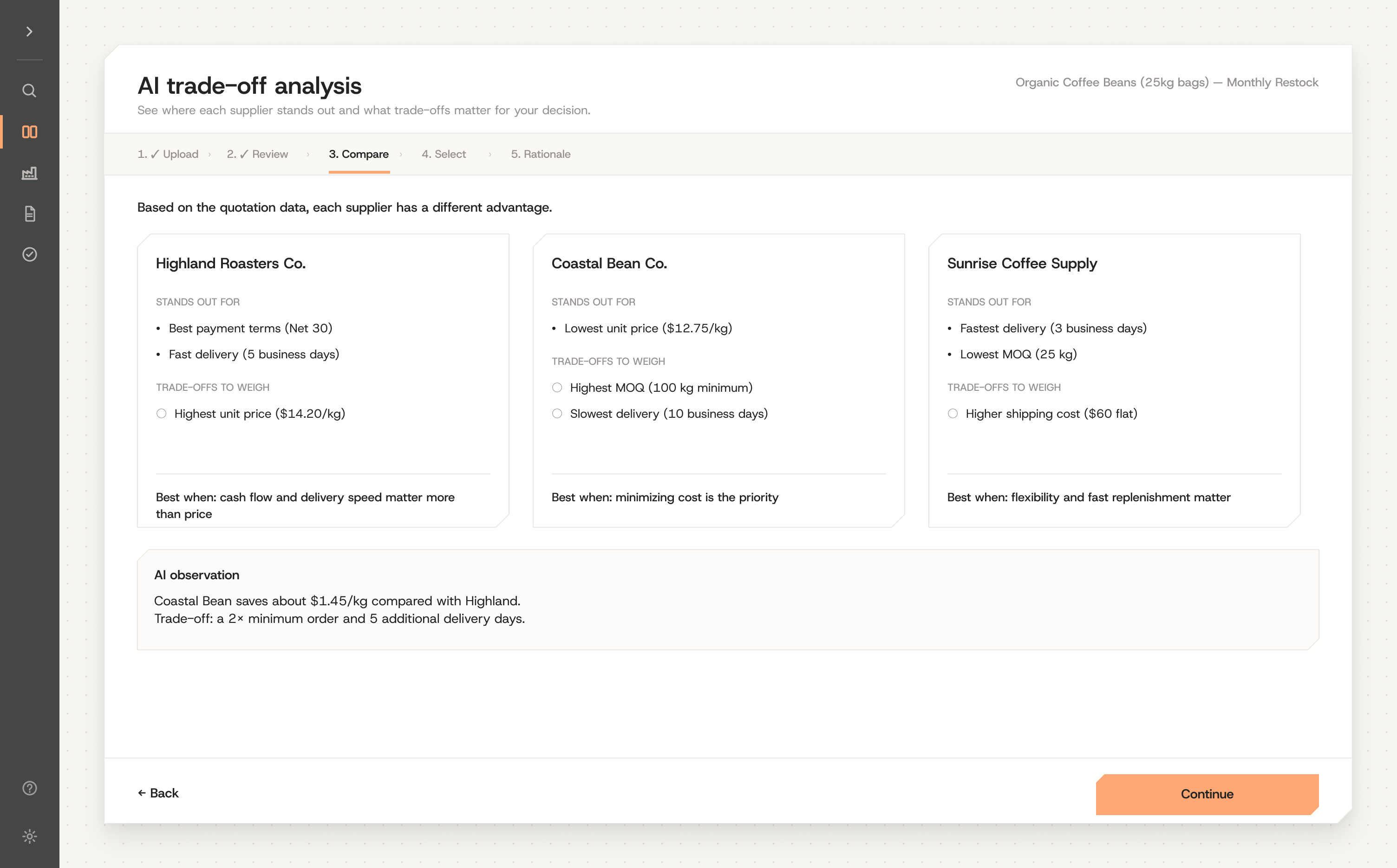
I kept the dense comparison workflow desktop-first, but introduced a lightweight mobile capture flow for moments when staff receive supplier information away from the desk.
That behavior held up in testing, so I kept source verification as a core interaction instead of redesigning it.
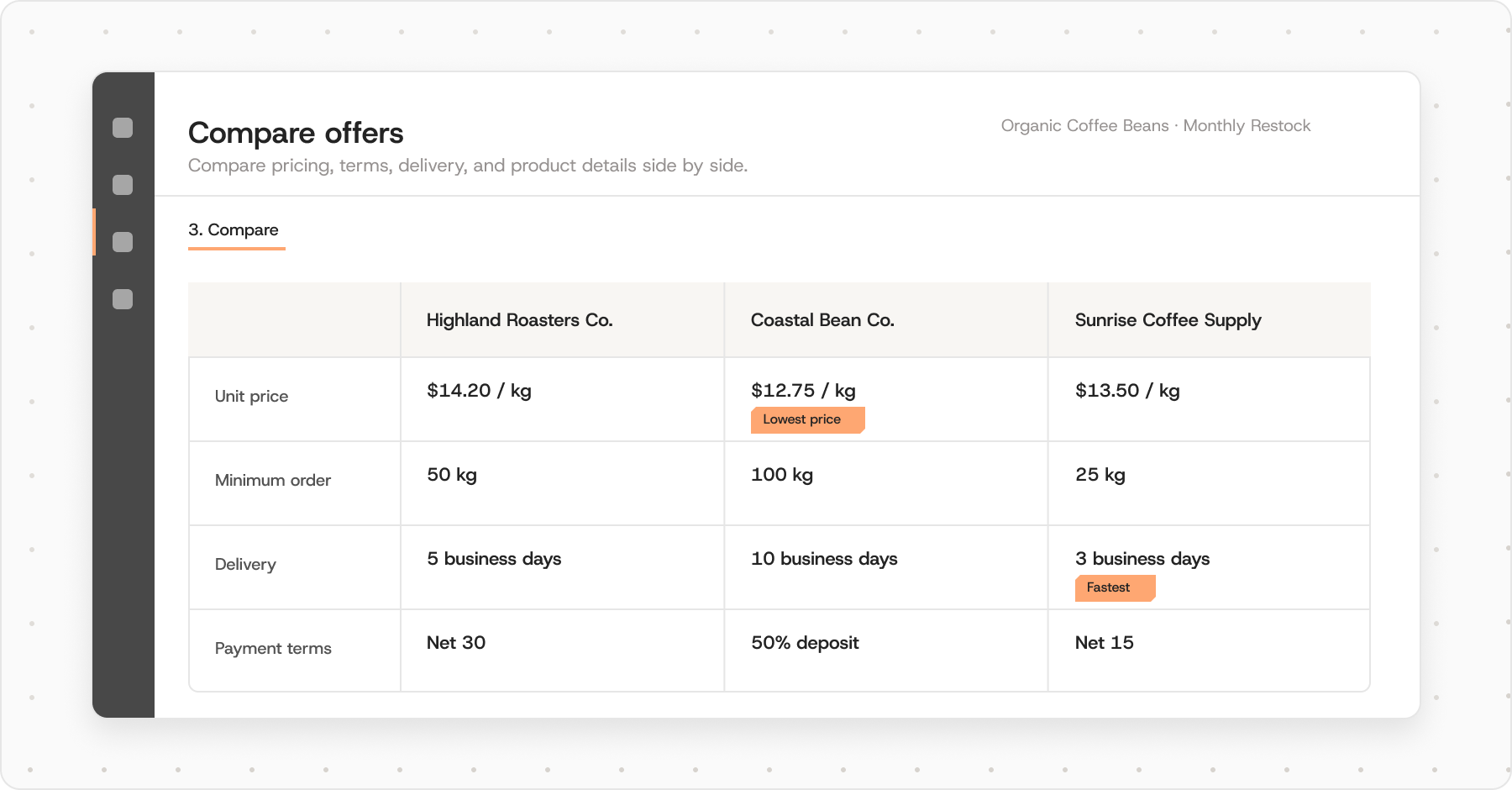
Orange highlights key actions and decisions, while the dotted grid adds subtle structure.
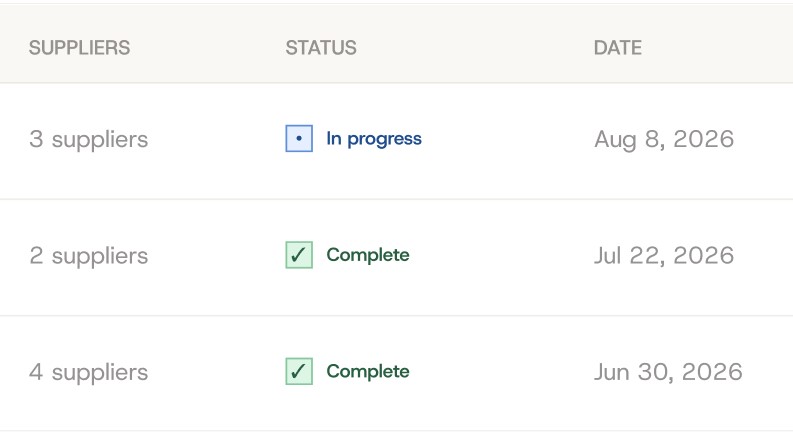
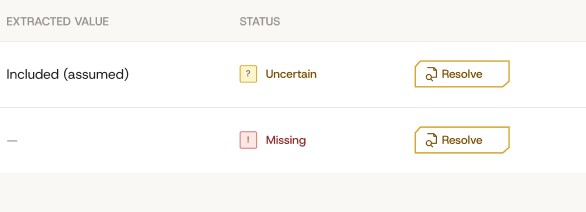
Status labels show progress at a glance.
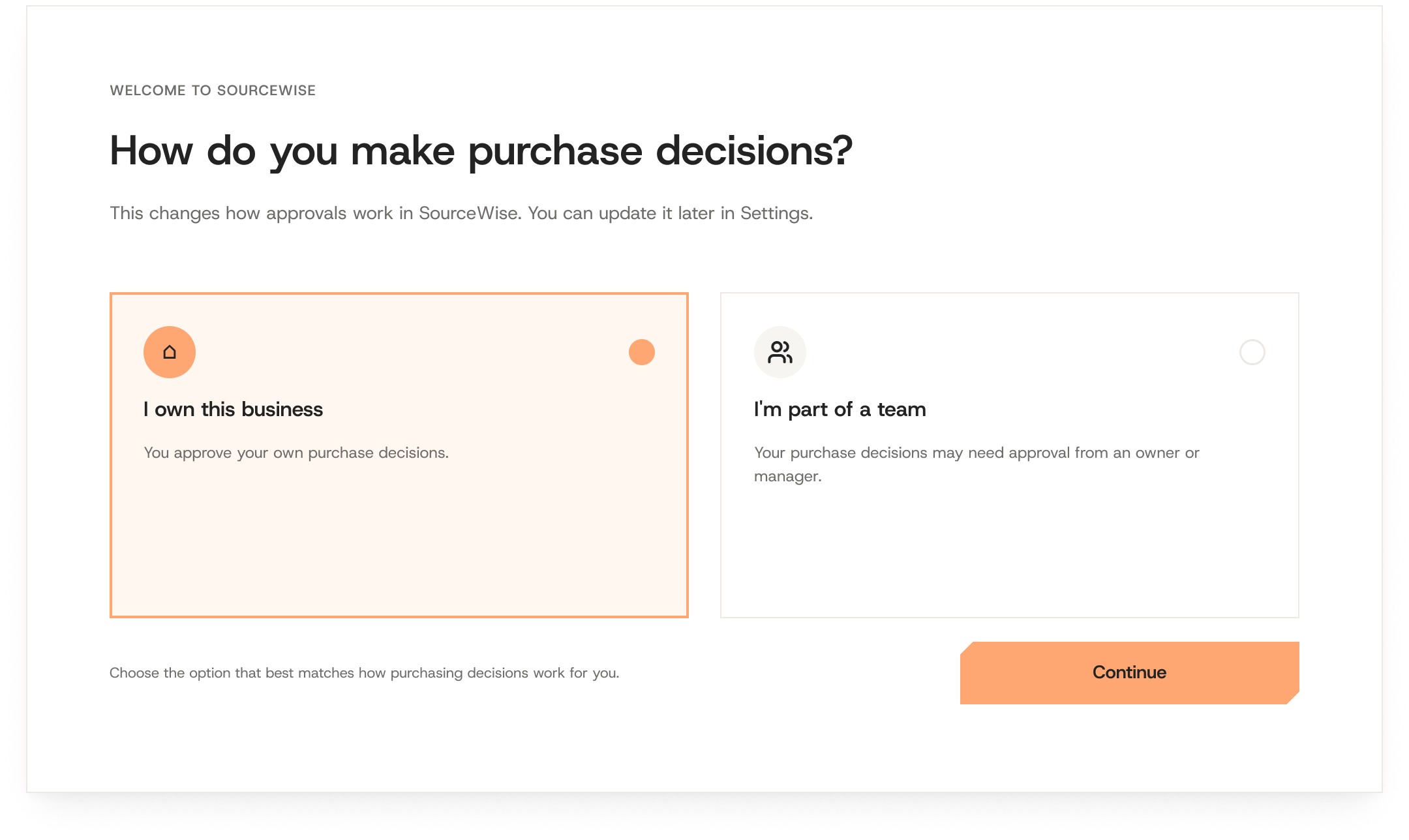
The app adapts to who you are: an owner who makes decisions independently, or a staff member who needs approval.
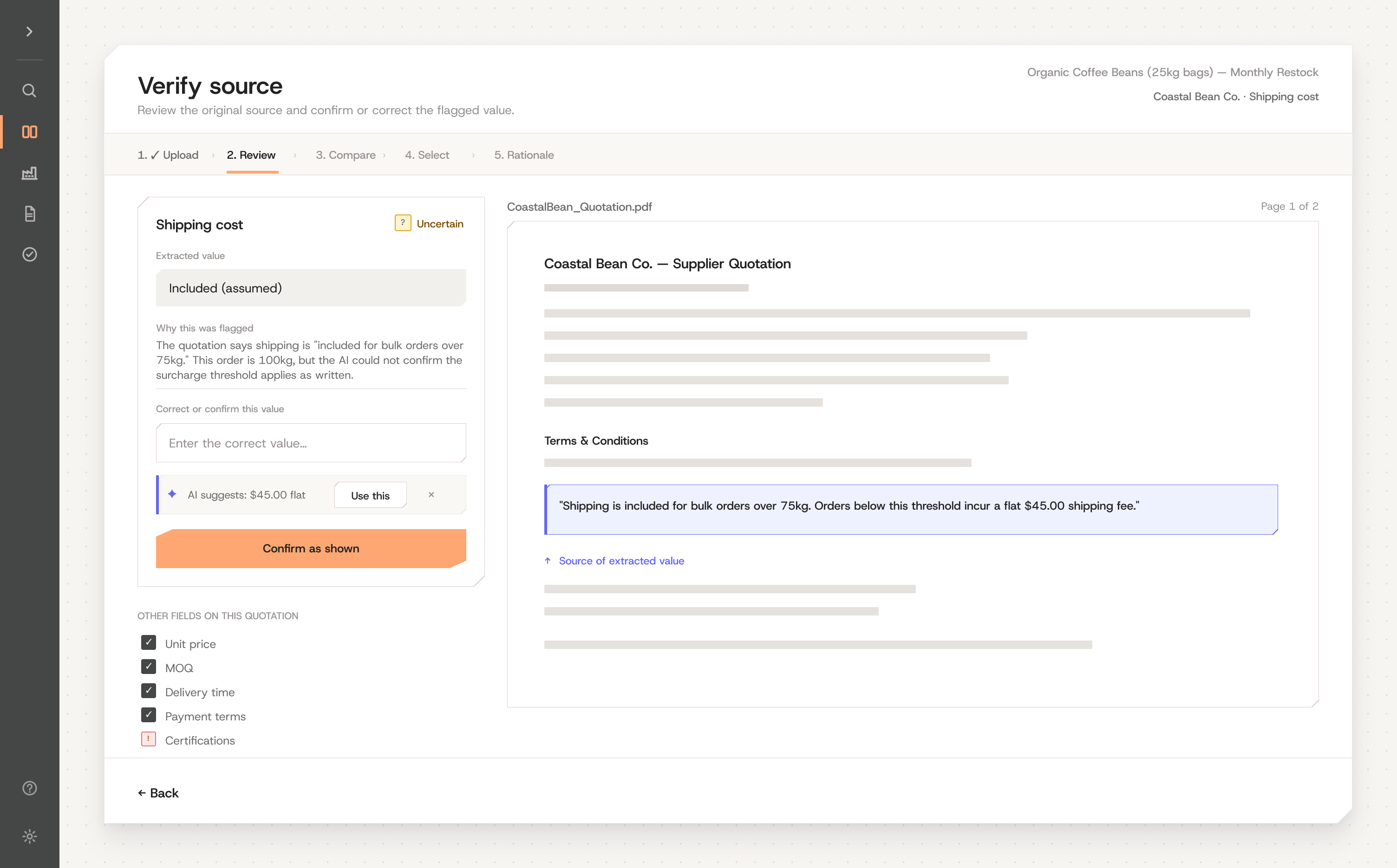
Every extracted value links straight back to the sentence it came from.
The final step turns a supplier selection into a documented decision.
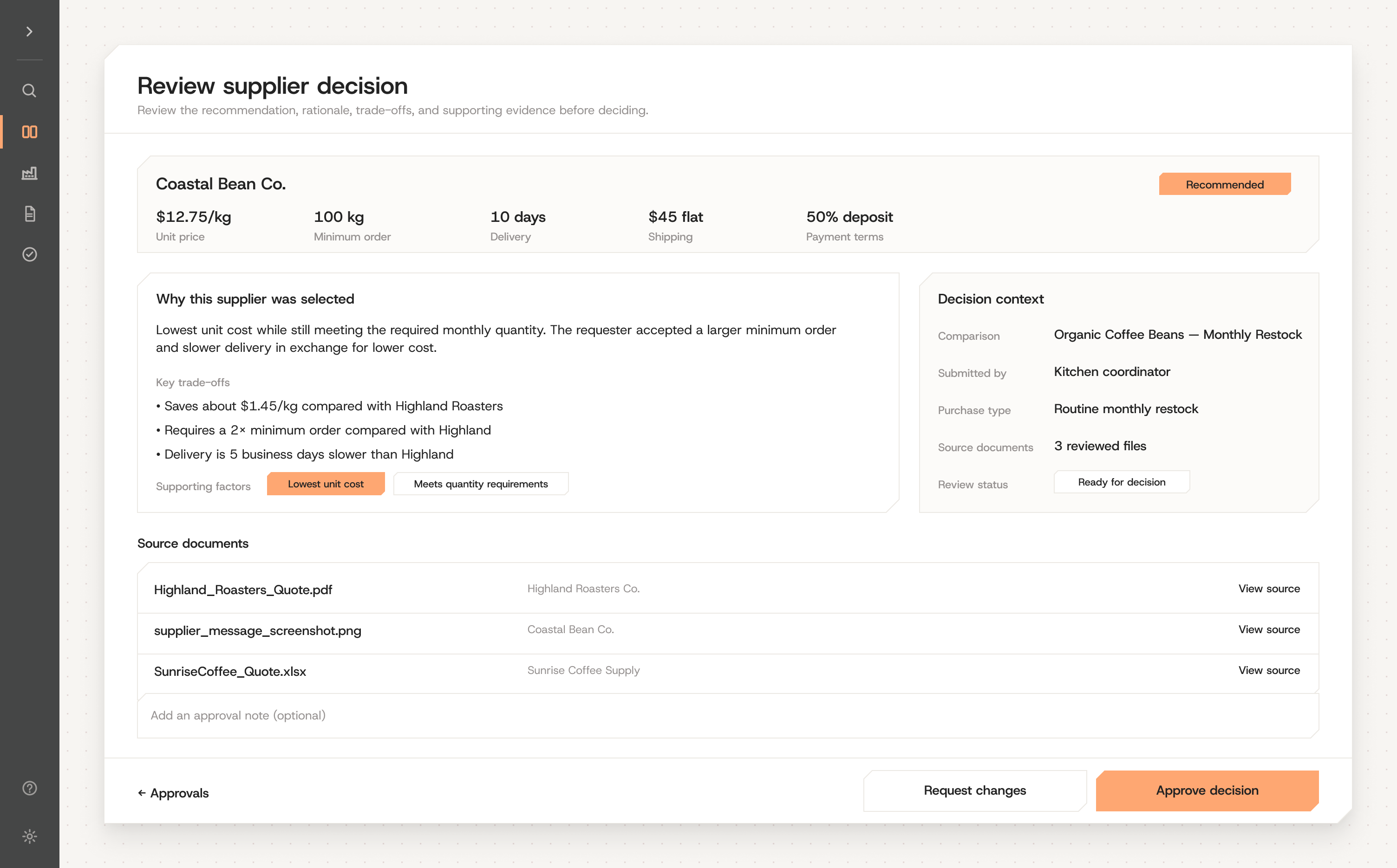
A clear shareable record of which supplier was chosen and why.
I mocked AI outputs to test how users would verify them, and treated three exploratory interviews as directional input rather than representative evidence.

Every instinct to show everything worked against the goal of keeping things simple for a non specialist. Testing usually told me which way to move.

I designed around comparing multiple quotes, but users also saw value in organizing a single supplier offer.

Users did not reject AI help. They needed to see where each value came from, and that reshaped most screens built after research.

